I once attended the matinee of a mediocre Mozart opera with a friend. When it came time for the tenor to come on stage, Plácido Domingo came out to sing the role. Everyone stood and gave him a standing ovation--before he even sang!
Compare this reaction to the picture that John gives us in Revelation 4 and 5, of the One seated on a throne surrounded by 24 Elders and angels, and the response of all creation to the Lamb seated on the throne in chapter 5.
Note what N. T. Wright says about this scene:

There are a few ideas in this quote from Wright that resonate with me:
I like what Wright says: This is God’s world as it should be, and the way it is in heaven already. I get goose bumps every time I read these two chapters of the Book of Revelation.
The question is, then, how do we worship here and now in our lives that somehow hearkens beyond us and replicates this heavenly scene?
For me, the practical question is how can I experience or enter into worship that is worthy of God the father, God the Son, and God the Holy Spirit.
Again, Wright gives us two ideas:
First, you become like what you worship.
What happens when you worship money, sex or power? We are shaped by our desires to conform to these objects of worship. What happens when we begin to truly worship the God who created all things and has redeemed us for himself through his son Jesus Christ by the power of his spirit?
Because we are made in God’s image, worship makes us truly human.
You discover more fully what it means to be human as well as you begin to shrink as a human; you are no longer the center of the universe.
Good start, but a long journey. I think Carson Pue (p30f) has given me some insight on this journey. He has stated that we often fall into two camps in our approach to following Christ.
The first group is similar to power-boaters, for whom the destination is of primary importance. The primary concern is to get to the destination as quickly and as safely as possible, and once there, concern shifts to having fun and enjoying the destination. This is what makes the journey worthwhile.
The second group are the sailors. The journey is as important as the destination. They enjoy the various aspects of the journey along the journey as the proceed toward the destination.
I’ve discovered that I need to become more of a sailor and less of a power-boater in my walk with Christ.
I won’t dwell on the implications of the two metaphors, but hopefully they are food for thought.


In my studies in the Book of Acts lately I’ve been thinking about the issue of intertextuality. The term is a school of thought that attempts to investigate the interconnectedness between texts. A good way to describe it is to think of a bricoleur (handyman or craftsman) who creates improvised structures by appropriating pre-existing materials which are ready-to-hand. The bricoleur constructs new arrangements by the practice of bricolage through several key transformations: addition, deletion, substitution and transposition.
Of course, one always needs a good academic quote to explain things:
“The term “intertextuality” is of rather recent coinage in both Jewish and Christian circles. It denotes not just relationships among texts, but also relationships between texts and their cultures.”
Richard Longenecker, Biblical Exegesis in the Apostolic period, pg. xx
“The phenomena of intertextuality – the imbedding of fragments of an earlier text within a latter one – has always played a major role in the cultural traditions that are heir to Israel’s Scripture: the voice of Scripture, regarded as authoritative in one way or another, continues to speak in and through latter texts that both depend on and transform the earlier.”
Richard B. Hays, Echoes of Scripture in the Letters of Paul, pg. 14
I think the key concept here is that intertextuality “denotes not just relationships among texts, but also relationships between texts and their cultures.” In scripture, it is the enculturation of a concept from one culture to another, i.e., from ancient Hebrew culture to the Greek-Jewish culture of the New Testament.
One good example on intertextuality that recurs throughout the Jewish scriptures is God’s Passover the five books of Moses (Ex. 23:10-19; Lev. 23:4-8), with synoptic views in Ex. 12:1-13 and Deut. 16:1-8, and echoed in Ezk 45:21-24 and Ezra 6:19-22. It is picked up again in the New Testament as the writers wrestled with the idea of a New Passover taking place in the life and ministry of Jesus Christ (1 Cor. 5:7):
7 Get rid of the old yeast that you may be a new batch without yeast- as you really are. For Christ, our Passover lamb, has been sacrificed.
Paul is the master of intertextuality,one need only to look at Romans and his understanding of Abraham (in Gen. 15) and what God wants to do for Israel.
There are obvious examples of this in the New Testament, such as the use of the texts in the Gospel of Matthew related to the coming of messiah. For example, Matt. 1:20ff:
20 But as he considered these things, behold, an angel of the Lord appeared to him in a dream, saying, “Joseph, son of David, do not fear to take Mary as your wife, for that which is conceived in her is from the Holy Spirit. 21 She will bear a son, and you shall call his name Jesus, for he will save his people from their sins.” 22 All this took place to fulfill what the Lord had spoken by the prophet:
23 “Behold, the virgin shall conceive and bear a son, and they shall call his name Immanuel”(which means, God with us).
What I see here is that there is more involved than seeing this passage as a prophecy; for me it resonates with how this fits into God’s plan for his people.
Often prophecy is used for apologetic purposes, more to support the idea how it is mathematically improbable for one person to fulfill all these prophecies of Messiah, yet here is Jesus, who fits the bill exactly. Put this prophecy on the pile with other scriptures that will rationally and intellectually prove beyond a doubt that the bible is true and God is real.
This is the same as someone describing a movie to us, giving us the bits they enjoyed, but missing the plot of the story completely.
By doing this, I think we miss the benefit of seeing what God is doing through out the ages to bring his plan to fruition, if we only see OT scripture as a proof text. To quote N. T. Wright:
God had a single plan all along through which he intended to rescue the world and the human race, and that this single plan was centered upon the call of Israel, a call which Paul saw coming to fruition in Israel’s representative, the Messiah (Justification, p 35).
Wright also states that failure to read scripture this way is like trying to figure out a puzzle with half the pieces missing.
So the key is to maintain the unity of the text without ignoring the bits that help us to understand what God is doing in the world.
As one writer states, it is the “absorption et transformation de l’autre text” (the absorption and transformation of another text.) It is the idea of a dialogue taking place between the writer and another text or dialogue.
I share this because as I look over the writings of the new testament and how it is related to event of the Old Testament, it leads me to rethink the role of what we commonly call prophecy. It is not that I don’t believe in prophecy, but I do believe that we should not lift stories and events about how God worked (and is working)among his people and set them up as kind of a proof text, independent of context and connection to the rest of God’s work. Kind of misses the point, I think.
(image credit here)

“XXIX. This, then, is what may be said by one who admits the silence of Scripture. But now the swarm of testimonies shall burst upon you from which the Deity of the Holy Ghost (Luke 1.35; 3.22; 4.1) shall be shown to all who are not excessively stupid, or else altogether enemies to the Spirit, to be most clearly recognized in Scripture. Look at these facts:—Christ is born; the Spirit is His Forerunner. He is baptized; the Spirit bears witness. He is tempted; the Spirit leads Him up (Luke 4.1, 18). He works miracles; the Spirit accompanies them. He ascends; the Spirit takes His place. What great things are there in the idea of God which are not in His power (Acts 2. 4)?
What titles which belong to God are not applied to Him, except only unbegotten and begotten? For it was needful that the distinctive properties of the Father and the Son should remain peculiar to them, lest there should be confusion in the Godhead which brings all things, even disorder itself, into due arrangement and good order.
Indeed I tremble when I think of the abundance of the titles, and how many Names they outrage who fall foul of the Spirit. He is called the Spirit of God, the Spirit of Christ, the Mind of Christ, the Spirit of The Lord, and Himself The Lord, the Spirit of Adoption, of Truth, of Liberty; the Spirit of Wisdom, of Understanding, of Counsel, of Might, of Knowledge, of Godliness, of the Fear of God.
For He is the Maker of all these, filling all with His Essence, containing all things, filling the world in His Essence, yet incapable of being comprehended in His power by the world; good, upright, princely, by nature not by adoption; sanctifying, not sanctified; measuring, not measured; shared, not sharing; filling, not filled; containing, not contained; inherited, glorified, reckoned with the Father and the Son; held out as a threat, the Finger of God; fire like God (to manifest, as I take it, His consubstantiality); the Creator-Spirit, Who by Baptism and by Resurrection creates anew; the Spirit that knows all things, that teaches, that blows where and to what extent He lists; that guides, talks, sends forth, separates, is angry or tempted; that reveals, illumines, quickens, or rather is the very Light and Life; that makes Temples; that deifies; that perfects so as even to anticipate Baptism (As in the case of the Centurion Cornelius, Acts 10. 9), yet after Baptism to be sought as a separate gift; that does all things that God does; divided into fiery tongues; dividing gifts; making Apostles, Prophets, Evangelists, Pastors, and Teachers; understanding manifold, clear, piercing, undefiled, unhindered, which is the same thing as most wise and varied in His actions; and making all things clear and plain; and of independent power, unchangeable, Almighty, all-seeing, penetrating all spirits that are intelligent, pure, most subtle; and also all prophetic spirits and apostolic in the same manner and not in the same places; for they lived in different places; thus showing that He is unconfined.” Orations 31.29

Where is the easiest place, say, for a man to be spiritual? Maybe again, is it hiding behind a big pulpit, dressed up in holy robes, preaching holy words to a faceless crowd and then disappearing into an office? And what is the most difficult, and therefore most meaningful, place for a man to be spiritual? At home, in the presence of his wife and children, where everything he does and says is automatically put through a spiritual litmus test against reality, where hypocrisy can be effectively weeded out and authenticity can grow. Much of Christianity has fled the family, often as a place of its own spiritual defeat, and then has organized artificial performances in sacred buildings far from the atmosphere of real life. As God is in the business of recapturing the homes, the church turns back to its roots, back to where it came from. It literally comes home, completing the circle of Church history at the end of world history.
As Christians of all walks of life, from all denominations and backgrounds, feel a clear echo in their spirit to what God's Spirit is saying to the Church, and start to hear globally in order to act locally, they begin to function again as one body. They organize themselves into neighborhood house-churches and meet in regional or city-celebrations. You are invited to become part of this movement and make your own contribution. Maybe your home, too, will become a house that changes the world.
You are welcome and encouraged to redistribute this article.

Jesus called a universal movement, and what came was a series of religious companies with global chains marketing their special brands of Christianity and competing with each other. Through this branding of Christianity most of Protestantism has, therefore, become politically insignificant and often more concerned with traditional specialties and religious infighting than with developing a collective testimony before the world. Jesus simply never asked people to organize themselves into denominations. In the early days of the Church, Christians had a dual identity: they were truly His church and vertically converted to God, and then organized themselves according to geography, that is, converting also horizontally to each other on earth. This means not only Christian neighbors organizing themselves into neighborhood- or house-churches, where they share their lives locally, but Christians coming together as a collective identity as much as they can for citywide or regional celebrations expressing the corporateness of the Church of the city or region. Authenticity in the neighborhoods connected with a regional or citywide corporate identity will make the Church not only politically significant and spiritually convincing, but will allow a return to the biblical model of the City-Church.
14. Developing a persecution-proof spirit
They crucified Jesus, the Boss of all the Christians. Today, his followers are often more into titles, medals and social respectability, or, worst of all, they remain silent and are not worth being noticed at all. "Blessed are you when you are persecuted", says Jesus. Biblical Christianity is a healthy threat to pagan godlessness and sinfulness, a world overcome by greed, materialism, jealousy and any amount of demonic standards of ethics, sex, money and power. Contemporary Christianity in many countries is simply too harmless and polite to be worth persecuting. But as Christians again live out New Testament standards of life and, for example, call sin as sin, conversion or persecution has been, is and will be the natural reaction of the world. Instead of nesting comfortably in temporary zones of religious liberty, Christians will have to prepare to be again discovered as the main culprits against global humanism, the modern slavery of having to have fun and the outright worship of Self, the wrong centre of the universe. That is why Christians will and must feel the "repressive tolerance" of a world which has lost any absolutes and therefore refuses to recognize and obey its creator God with his absolute standards. Coupled with the growing ideologisation, privatization and spiritualization of politics and economics, Christians will, sooner than most think, have their chance to stand happily accused in the company of Jesus. They need to prepare now for the future by developing a persecution-proof spirit and an even more persecution-proof structure.

The church is changing back from being a Come-structure to being again a Go-structure. As one result, the Church needs to stop trying to bring people "into the church," and start bringing the Church to the people. The mission of the Church will never be accomplished just by adding to the existing structure; it will take nothing less than a mushrooming of the church through spontaneous multiplication of itself into areas of the population of the world, where Christ is not yet known.
12. Rediscovering the "Lord's Supper" to be a real supper with real food
Church tradition has managed to "celebrate the Lord's Supper" in a homeopathic and deeply religious form, characteristically with a few drops of wine, a tasteless cookie and a sad face. However, the "Lord's Supper" was actually more a substantial supper with a symbolic meaning, than a symbolic supper with a substantial meaning. God is restoring eating back into our meeting.

The "Body of Christ" is a vivid description of an organic, not an organized, being. Church consists on its local level of a multitude of spiritual families, which are organically related to each other as a network, where the way the pieces are functioning together is an integral part of the message of the whole. What has become a maximum of organization with a minimum of organism, has to be changed into a minimum of organization to allow a maximum of organism. Too much organization has, like a straightjacket, often choked the organism for fear that something might go wrong. Fear is the opposite of faith, and not exactly a Christian virtue. Fear wants to control, faith can trust. Control, therefore, may be good, but trust is better. The Body of Christ is entrusted by God into the hands of steward-minded people with a supernatural charismatic gift to believe God that He is still in control, even if they are not. A development of trust-related regional and national networks, not a new arrangement of political ecumenism is necessary for organic forms of Christianity to reemerge.
10. From worshipping our worship to worshipping God
The image of much of contemporary Christianity can be summarized, a bit euphemistically, as holy people coming regularly to a holy place at a holy day at a holy hour to participate in a holy ritual lead by a holy man dressed in holy clothes against a holy fee. Since this regular performance-oriented enterprise called "worship service" requires a lot of organizational talent and administrative bureaucracy to keep going, formalized and institutionalized patterns developed quickly into rigid traditions. Statistically, a traditional 1-2 hour "worship service" is very resource-hungry but actually produces very little fruit in terms of discipling people, that is, in changed lives. Economically speaking, it might be a "high input and low output" structure. Traditionally, the desire to "worship in the right way" has led to much denominationalism, confessionalism and nominalism. This not only ignores that Christians are called to "worship in truth and in spirit," not in cathedrals holding songbooks, but also ignores that most of life is informal, and so is Christianity as "the Way of Life." Do we need to change from being powerful actors to start "acting powerfully?"

In doing a puzzle, we need to have the right original for the pieces, otherwise the final product, the whole picture, turns out wrong, and the individual pieces do not make much sense. This has happened to large parts of the Christian world: we have all the right pieces, but have fitted them together wrong, because of fear, tradition, religious jealousy and a power-and-control mentality. As water is found in three forms, ice, water and steam, the five ministries mentioned in Eph. 4:11-12, the Apostles, Prophets, Pastors, Teachers and Evangelists are also found today, but not always in the right forms and in the right places: they are often frozen to ice in the rigid system of institutionalized Christianity; they sometimes exist as clear water; or they have vanished like steam into the thin air of free-flying ministries and "independent" churches, accountable to no-one. As it is best to water flowers with the fluid version of water, these five equipping ministries will have to be transformed back into new, and at the same time age-old, forms, so that the whole spiritual organism can flourish and the individual "ministers" can find their proper role and place in the whole. That is one more reason why we need to return back to the Maker's original and blueprint for the Church.
8. God does not leave the Church in the hands of bureaucratic clergy
No expression of a New Testament church is ever led by just one professional "holy man" doing the business of communicating with God and then feeding some relatively passive religious consumers Moses-style. Christianity has adopted this method from pagan religions, or at best from the Old Testament. The heavy professionalization of the church since Constantine has now been a pervasive influence long enough, dividing the people of God artificially into laity and clergy. According to the New Testament (1 Tim. 2:5), "there is one God, and one mediator also between God and men, the man Christ Jesus." God simply does not bless religious professionals to force themselves in-between people and God forever. The veil is torn, and God is allowing people to access Himself directly through Jesus Christ, the only Way. To enable the priesthood of all believers, the present system will have to change completely. Bureaucracy is the most dubious of all administrative systems, because it basically asks only two questions: yes or no. There is no room for spontaneity and humanity, no room for real life. This may be OK for politics and companies, but not the Church. God seems to be in the business of delivering His Church from a Babylonian captivity of religious bureaucrats and controlling spirits into the public domain, the hands of ordinary people made extraordinary by God, who, like in the old days, may still smell of fish, perfume and revolution.
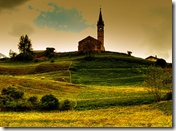
Most churches of today are simply too big to provide real fellowship. They have too often become "fellowships without fellowship." The New Testament Church was a mass of small groups, typically between 10 and 15 people. It grew not upward into big congregations between 20 and 300 people filling a cathedral and making real, mutual communication improbable. Instead, it multiplied "sidewards", like organic cells, once these groups reached around 15-20 people. Then, if possible, it drew all the Christians together into citywide celebrations, as with Solomon's Temple court in Jerusalem. The traditional congregational church as we know it is, statistically speaking, neither big nor beautiful, but rather a sad compromise, an overgrown house-church and an under-grown celebration, often missing the dynamics of both.
6. No church is led by a Pastor alone
The local church is not led by a Pastor, but fathered by an Elder, a local person of wisdom and reality. The local house-churches are then networked into a movement by the combination of elders and members of the so-called five-fold ministries (Apostles, Prophets, Pastors, Evangelists and Teachers) circulating "from house to house," whereby there is a special foundational role to play for the apostolic and prophetic ministries (Eph. 2:20, and 4:11.12). A Pastor (shepherd) is a very necessary part of the whole team, but he cannot fulfill more than a part of the whole task of "equipping the saints for the ministry," and has to be complemented synergistically by the other four ministries in order to function properly.
In rediscovering the gospel of salvation by faith and grace alone, Luther started to reform the Church through a reformation of theology. In the 18th century through movements like the Moravians there was a recovery of a new intimacy with God, which led to a reformation of spirituality, the Second Reformation. Now God is touching the wineskins themselves, initiating a Third Reformation, a reformation of structure.
4. From Church-Houses to house-churches
Since New Testament times, there is no such thing as "a house of God". At the cost of his life, Stephen reminded unequivocally: God does not live in temples made by human hands. The Church is the people of God. The Church, therefore, was and is at home where people are at home: in ordinary houses. There, the people of God:

John Dewey proposed a philosophy of education that focused on traditional education (education from without) and progressive education (experience, education from within). Traditional education focuses mainly on content, but it can become a “banking concept” for the transfer of knowledge.
Progressive education (education from within, or experience) is the other school of thought. Basically, it is grows out of our life experiences; but without sufficient or proper content, it will do little to offer growth or development. For Dewey, there needed to be a proper tension between education and experience.
As an educator in the church, I think we need the tension between what we are taught and what we experience in our spiritual formation. Teaching that is little more than throwing words out to the learner and hope that somehow they will appropriate them and figure out what we need to know and put into practice is not much use, either to the learner or to the body of Christ .
Our preaching and teaching needs to educate us (think of it, if you will, as providing the raw materials), it should also provide guided, practical experiences that will help us to understand and assimilate what we have learned and how to apply it to life in order to promote growth and development in our spiritual formation.
Next time: What are we to teach?

Missions historian Stephen Neil expresses the concern that when churches focus on societal transformation, and particularly when they call it missions, then “everything” is mission. Neil explained, “when everything is mission, nothing is mission.” Those words were prophetic: he spoke those words to a movement that progressively moved away from church planting and evangelistic missions to a near total focus on social justice.
Moreover, are there historical patterns that further confirm Neil’s concerns? When we look at the history of missions, it is frequent (dare I say common?) that those churches which focus on societal change lose their focus on evangelism and church planting. The most healthy churches engage in evangelism (individual transformation), church planting (collective transformation), and societal impact (cultural transformation). And one tends to lead to the others. The best societal impact occurs when it is a reflection of individual and collective, gospel transformation.
When I am told that their church is missional, or they are “being sent,” what I see and hear don’t always align.
Besides losing our focus on evangelism and transformation, our mission ventures run the danger of becoming a project.
Food for thought.

“Churches throughout the Western world find themselves increasingly marginalized from society as they endeavor to relate the good news to people whose assumptions and attitudes have been shaped by modernity and postmodernity. Our post-Christian, neopagan, pluralistic North American context presents cross-cultural missionary challenges every bit as daunting as those we would face on any other continent.
Unfortunately most pastors and church leaders have had no missiological training. Consequently they resort to marketing strategies in place of missionary insights in their attempts to reach out to a population that is becoming increasingly distanced from the church.”
– Eddie Gibbs in Church Next: Quantum Changes in How We Do Ministry
“Since that time, the market machine has spun out many conflicting definitions of missional church. In general, these definitions share a sense that the church is not primarily about us, but about God's mission. But consensus breaks down over what God's mission is and what it means to participate in it.
For others, the missional impulse has been translated into a consumer-oriented mentality—again, an approach that the authors of Missional Church explicitly reject. Some pastors I know are being pressured with missional language to focus their preaching on felt needs. Thus, preaching on "How to Be a Better Spouse" or "How to Be Financially Successful" is considered missional, while preaching straight through a book of the Bible, a common Reformational practice, is seen as an old habit of Christendom. When our needs set the agenda, how can we learn to embody the gospel that is not just our story, but first and foremost God's? The seeker-sensitive mentality reflects a profoundly different ecclesiology from that of Missional Church, which claims that God's people need to rediscover the centrality of God's action in shaping our witness to the world.”
-J. Todd Billings “What Makes a Church Missional?”

"We took as our starting point what God Himself said and still says concerning God, and concerning the knowledge and reality of God, by way of the self-testimony which is accessible and comprehensible because it has been given human form in Holy Scripture, the document which is the very essence and basis of the church (CD II.2,p3)
I especially like this observation: Our starting point concerning the doctrine of God is neither an axiom of reason nor a datum of experience. The measure that the doctrine of God draws on these sources betrays the fact that its subject is not really God but a hypostatized reflection of man.
This all goes to say that it is by God that God is known.
This struck me when I read this in Don Miller’s Blog:
Our artists walk away and make secular music and write secular books because they want to say something beautiful and meaningful and so have to walk away from the self-help gospel they grew up hearing about in church.
When we start believing the true story, we will start telling it, and when we start telling it, we’ll help make sense of the world. Story is a sense-making device. And the gospel of Jesus makes sense.
Powerful stuff.
The point of this interpolation is this: We approach our knowledge of God as something we can learn is we study or try hard enough, thus the principles or self-help program approach to knowing God.
What would happen if we took our understanding of God seriously?

I came across this C. S. Lewis quote from The Great Divorce.
Time is the very lens through which ye see –small and clear, as men see through the wrong end of a telescope –something that would otherwise be too big for ye to see at all (p 140f).
This quote gave me pause for thought. When you consider that MacDonald explains that Lewis’ voyage from Hell to Heaven wasn’t just locomotion, but also increasing in size, works to help me realize that my view of heaven and ‘--by implication, of God, are bound by where I stand in the universe.
This has also come true this week through the SSD conference led by Larry Crabb. I know I do have a skewed view of God and who he is. I can hide on this side of my spiritual telescope and pretend I have it all together.
The telescope is actually meant to be more of a microscope, to help hem see my shrunken heart and land of perpetual pre-dawn that the characters of Lewis’ book lived in before they took the bus to heaven.


It deals with the idea of what it means to be missional. Yes, of course, I’ve been a fan of the emerging church and what it means to be missional, but there always seems to be something missing.
I think Scot McKnight’s comment about postmodernism and its relationship to the emerging church in the April 2009 issue of the UK Magazine Christianity,
We found that it tasted good, even if at times we found ourselves spitting out hard chunks of nonsense.
I can concur with that sentiment. However, Larry Crabb gave a short overview of what he thinks it means to be missional, which I would like to reproduce here.
Disclaimer: Any cloudiness or murkiness engendered by this article is my fault and not Larry Crabb’s.
Larry suggested that often we approach the missional activity like this:
Idea:
This is based on our Passion, message, vision, and Strategy.
What do we do? We dialogue, organize, and initiate. And we end up with:
The result? We make it happen!
This is linear, systems thinking at its best.
Larry Crabb suggests another path: Reflect, repent, and release.
Again we start with an Idea:
1. We begin by reflecting as asking the questions: What is my ruling passion? What is God’s passion? What other passions do we see?
2. We look at Relationships. The questions we ask may include:
3. This leads to Repentance.
4. This leads to a Release to Ministry. This leads to:
This is definitely not systems thinking. It is also not how we usually do ministry. Think about it, and work through it, and give me any feedback you may have.
 A Christian Response to the 2008 Presidential Election
I have to admit to a bit of sadness over the response of Christians to the election of Barack Obama. I consider myself an independent, and more often than not during my political experience I have voted against a candidate rather than for. That too makes me sad.
I have a couple of observations that I want to comment on.
1. Election Rhetoric.
It struck me that much of what republicans and democrats are saying about this election is much the same as what came out of the mouths of republicans and democrats in 2000 and 2004. Only this time, the remarks have switched parties. For example, republican friends say that a large majority of the country do not agree with the views of the new president (The democrats said this in 2000 and 2004), while on the other hand, democratic friends are saying that the election returns give Obama a mandate for change; again, something that the republicans said in 2000 and 2004.
2. Many of my Christian friends prayed fervently for this election.
Obama won. Did God not answer their prayers?
Or, did God answer their prayers?
God is known to work out his will despite his people. If God did answer these prayers, what does that do to our theology? Still more, what does this say about our support for Barack Obama? I don't want to be put into the situation of second guessing God. My guess is that there is a lot of change in the air, and we have to decide for whom the church will be a handmaid. What if Obama is the gate through which we need to walk in order to bring change to this country and stave off judgment?
3. Election Issues.
There are a lot more issues in this presidential election that are as important as abortion and homosexuality, but evangelicals are shy to address. For example, approximately 30,000 people die of starvation, waterborne diseases and AIDS each day, deaths which are viewed as preventable, yet I am only now beginning to see organizations such as Feed My Starving Children gain visibility. I guess what I'm trying to say is that we better be certain that we don't react to what God is doing when Rhoda comes to tell us that Peter is at the door (Acts 12:12-17).
4. I am astonished at the amount of negativity coming from the mouths of Christians!
Come on people, we are people of hope. The elections are important, but let's focus, okay?
Having said all this, the point of this post is this: We need to stop moaning and beefing about who won the presidency, and pray just as hard for the success of this man in God's will as we did for the whom we thought God wanted as president during this election campaign.
Here are two parts of a post by by Mark Roberts that speaks to the issue of how to pray for the election and the new president (here and here). I like what he says in his first point:
We Should Act Upon the Call of Jesus to Peacemaking in the Way We Relate to Our Fellow Citizens.

(Posted using ShareThis)
 There are times that I am embarrassed to be a follower of Christ. It is NOT that I am embarrassed of my LORD, but because of some of the people with whom I am on the journey. And that's too bad, it saddens me. Before anyone picks up cudgels to bludgeon me, please read through to the end of the article to see what I have to say.
From the "As if we don't shoot ourselves in the foot enough" department comes this: a group of Christians gathering to pray for the economy in a public spectacle. Notice the focus-point for their time of prayer --a giant golden bull on Wall Street.
The response is not surprising. One blog was a bit sympathetic (and to the point), but most were less sympathetic and understanding.
Paul wrote to the church in Corinth and told them that "...not many of you were wise by human standards," but I don't think that this is the kind of thing that he had in mind, any more than acting stupid for gospel insures that God will descend deus ex machina to answer our prayers.
I believe in the prayer, but I guess I don't get the point of this time of prayer. Yes, I know that they weren't worshiping this gilded statue, but the metaphor of the wall street icon shows the irony of this situation. What are they asking God to do? Restore our culture so we can continue to consume and spend mindlessly? The problem with the Israelites of the original story was that their stomachs were their god. What does this gathering tell people? Somehow it seems to point to all the evil and greed that got us into this mess to begin with (see this article).
I endorse praying for the economy, especially since the people on the lower rungs of society get hit the hardest. I loved the comment to an article that I found on a blog that said that "as Christians we should be giving MORE in a recession rather than less." It is a matter of compassion and a realization that our source for wealth and giving is not linked to the vagaries of markets and such. Yet in financial turn-arounds like now we turn inward and clutch our wealth tightly to our chests to prevent it from slipping out of our grasp.
What is our agenda for praying for the economy? That I don't become poor? Or, that God will have room to work out his perfect will for our country?
I found this article that I think has a couple of valid points. An important question is:
Is it right to pray for the economy?
I think it is appropriate to pray for the economy. After all, God said to Jeremiah,
"Seek the welfare of the city where I have sent you into exile, and pray to the Lord on its behalf, for in its welfare you will find your welfare" (Jeremiah 29:7).
When the economy is strong, people are able to work and support their families, believers have greater opportunities for generosity, and many benefit from this common grace.This fits in well with Paul's idea of living in peace with everyone and other sentiments in Romans 13, among other things.
We can pray for integrity and wisdom for government officials who are faced with the incredibly complex task of regulating investment securities and banks in a way that is transparent and serves all of the varied stakeholders. We can pray that those who are willing to work will be able to find gainful employment. We can pray that greed would be restrained at all levels, from the leaders on Wall Street to individual families tempted to live beyond their means. We can pray for ourselves that we will participate in the national economy that keeps in mind the time is short and the present form of this world is passing away (1 Corinthians 7:29-31).
“And when you pray, do not be like the hypocrites, for they love to pray standing in the synagogues and on the street corners to be seen by men. I tell you the truth, they have received their reward in full. 6 But when you pray, go into your room, close the door and pray to your Father, who is unseen. Then your Father, who sees what is done in secret, will reward you. 7 And when you pray, do not keep on babbling like pagans, for they think they will be heard because of their many words. 8 Do not be like them, for your Father knows what you need before you ask him (Matt 6:5-8).I think this says that public spectacles may not necessarily be the best way to pray about an issue.
25 “Therefore I tell you, do not worry about your life, what you will eat or drink; or about your body, what you will wear. Is not life more important than food, and the body more important than clothes? 26 Look at the birds of the air; they do not sow or reap or store away in barns, and yet your heavenly Father feeds them. Are you not much more valuable than they? 27 Who of you by worrying can add a single hour to his life. Or single cubit to his heightIt seems that praying for the economy isn't about praying for our daily bread. It is about praying for Righteousness AND Justice. Righteousness is about our relationship with God; Justice is about our society's relationship with God.
28 “And why do you worry about clothes? See how the lilies of the field grow. They do not labor or spin. Yet I tell you that not even Solomon in all his splendor was dressed like one of these. If that is how God clothes the grass of the field, which is here today and tomorrow is thrown into the fire, will he not much more clothe you, O you of little faith? 31 So do not worry, saying, ‘What shall we eat?’ or ‘What shall we drink?’ or ‘What shall we wear?’ 32 For the pagans run after all these things, and your heavenly Father knows that you need them. 33 But seek first his kingdom and his righteousness, and all these things will be given to you as well. 34 Therefore do not worry about tomorrow, for tomorrow will worry about itself. Each day has enough trouble of its own (Matt. 6:25-34).
"I guess as a Christian I can't help but think of the bigger picture beyond just my own nation. And sometimes I wonder if God orchestrates these things to show us things. Like if Ireland and America and other well to do countries don't change their ways with regards to consumption and waste would we not end up in a situation where the poor are suffering as a result, or that they will never have the opportunity to live like we do?"Finally, a nice video by Max Lucado that's worth a look.
In light of recent events, maybe we need a new national anthem. I nominate this one.