The last post on this site was 2015, a year or so before we returned to the US from France.
Since then, we've lost my brother, mother, nephew and sister in law. It's been rough.
God is good, and I think I will use this platform to publish some thoughts and ideas as I go along.
Thanks again for checking in.
howard
20 December 2019
Where have you been?
06 May 2014
Women of God: MARY, MOTHER OF JESUS Luke 1
God was about to break into the world in human flesh. His plan included working through the life of a teenage girl. It is interesting that in a patriarchal society, the angel visited Mary first. He did not visit Joseph first to get his permission. He did not discuss God's plan with Joseph and ask if he was willing to go along with it. Nor did Mary put the angel's message on hold and go to ask Joseph what she should do before responding.
Mary did not need to get Joseph's permission or submit to his authority. She had God's word, God's authority. That was enough for her. Mary was willing to submit to God's will with or without Joseph. She had no idea what Joseph's response would be. She had no idea what he would do. The decision was hers and hers alone to make. She was called on by God to do his work and she willingly submitted. She was willing to face the humiliation, ridicule, and rejection of pregnancy before marriage — alone if need be.
That does not mean that Mary did not need Joseph. She needed Joseph's love, his support, his understanding, his willingness to serve God alongside her, his partnership, his protection in a patriarchal society. She needed him to walk the journey with her. But, when she responded with a resounding yes to the angel, she did not have the assurance that Joseph would stand with her when she accepted God's call on her life. But, she did not need his permission to do what God called her to do. Joseph was told after the fact, and he willingly submitted to God's call on Mary's life. He stood with her, supported her, and encouraged her. Joseph was Mary's "ezer kenegdo" — her "suitable helper." --dona
16 September 2009
This is just a test...
Seeking Justice Sermon
Actually, it works rather nice, but I have to make my margins wider on my blog. Since I'm using the original blogger template, I'll have to ask my wife to do it for me.
But anyway, it works. Let me know what you think.
04 September 2009
Eating the carrot?
This is one of my favorite Peanuts cartoons. I had a similar experience this week. I had about 12 boxes of books from the library of my previous existence. I finally said enough was enough and called a local book dealer to take them off my hands.
It was tough to see these old friends leave, but I hope they will all find a good home.
What’s the spiritual application? I have no clue, I am enjoying eating the carrot. I took the money over to Kohl’s and bought a bunch of clothes to take back to France.
Oh well.
02 September 2009
Old Testament holy war and the character of God: defining the terms
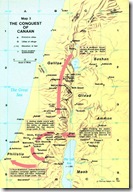
A request came to me to provide an answer to the question of the Canaanite conquest, and how do we square that with the idea of a loving God (for background on this, go to Dan van Loon’s posts here and here). But having said that, I am now finishing the study I started earlier on this topic, so I will try to share a bit of my conclusions.
A. Is the war of conquest against the Canaanites Jihad? Genocide? Ethnic cleansing? We need to understand that what occurred in the books of Joshua and Judges was not Jihad. Let me explain.
According to the most Muslim traditionalists, the world is divided into two camps:
- The House of Islamic Peace (Dar al-Salam), where Muslim governments rule and Muslim law prevails.
- The House of War (Dar al-Harb), which refers to the rest of the inhabited world.
The presumption is that these two camps will compete and that fighting is inevitable. Therefore the duty of Jihad will continue, interrupted only by truces until all the world either adopts the Muslim faith or submits to Muslim rule. Those who fight in the Jihad qualify for rewards in both worlds — treasure in this one, paradise in the next. From the lifetime of the Prophet Muhammad onward the word Jihad is used in a primarily military sense.
Commonly, Jihad requires Muslims to “struggle in the way of God” or “to struggle to improve one's self and/or society.” The four major categories of Jihad that are recognized are:
- Jihad against one's self (Jihad al-Nafs),
- Jihad of the tongue (Jihad al-lisan),
- Jihad of the hand (Jihad al-yad),
- Jihad of the sword (Jihad as-sayf).
Islam focuses on regulating the practice of Jihad. It is a call to all Muslims to engage in this struggle, ongoing and intentional. You will hear of fundamentalist Muslim groups who will declare a Jihad against a group or country (such as Al Qaeda against the US), but this is an extension of the central idea of Jihad.
Put simply, Jihad is a struggle that every devout Muslim is called upon to wage against the enemies of Allah. It is ongoing, and will not end until the conditions discussed above are realized. The best that the enemies of Islam can hope for are truces. The ultimate goal is submission of the world to Allah and the rule of Islam.
It is important to note that Jihad is mandated by Allah through the Qur’an, but it is declared by people (e.g., leaders), who also identify who the enemies are to be.
B. The focus in Scripture is on Yahweh war, or as it is incorrectly called, “holy war.” The term refers to war sanctioned by Yahweh (usually translated in our bibles with the phrase LORD, all capitals). But we need to note some important differences.
The conquest (and hence Yahweh war), was a single event, a unique event and limited event, lasting one generation, and was not meant to be a model of how future generations of Israelites should live and behave toward their contemporaries. It was an act of God, a call to take part in the Yahweh war. Yahweh war is not a feat of military prowess by the Israelites, or even their victory.
C. Genocide is a word sometimes used to describe the Conquest of Canaan. Genocide means the killing of an ethnic or culture group. In current usage, it is based on vicious self-interest, based on some view or myth of racial superiority, and is little more than ethnic cleansing.
The conquest of Canaan is never seen as ethnic cleansing, or as a mark of moral superiority. Nor is the action of Israel seen as a mark of oppression.
It seems, therefore, that we need to define our terminology. Jihad and genocide are not the same concepts as Yahweh war. To define the conquest of Canaan in these terms misses the point and clouds our understanding of the events. Our discussion can now move into the arenas of philosophy and theology.
When we do this, we find that there are no simple answers for this question. But a comment by N.T. Wright about the Conquest in his book Evil and the Justice of God (IVP, 2006) seems a good place to start:
“We look back from our historical vantage point – and post-Enlightenment thought has looked back from its supposed position of moral superiority – and we shake our heads over the whole sorry business of conquest and settlement. Ethnic cleansing, we call it; however much the Israelites had suffered in Egypt, we find it hard to believe that they were justified in doing what they did to the Canaanites, or that the God who was involved in this operation was the same God we know in Jesus Christ.
And yet ever since the garden, ever since God’s grief over Noah, ever since Babel and Abraham, the story has been about the messy way in which God has had to work to bring the world out of the mess. Somehow, in a way we are inclined to find offensive, God has to get his boots muddy and, it seems, to get his hands bloody, to put the world back to rights. If we declare, as many have done, that we would rather it not so, we face a counter-question: Which bit of dry, clean ground are we standing on that we should pronounce on the matter with such certainty? Dietrich Bonhoeffer declared that the primal sin of humanity consisted in putting the knowledge of good and evil before the knowledge of God. That is one of the further dark mysteries of Genesis 3: there must be some substantial continuity between what we mean by good and evil and what God means; otherwise we are in moral darkness indeed. But it serves as a warning to us not to pontificate with too much certainty about what God should and shouldn’t have done” (pp. 58-59).
Wright is saying that there must be a consistent understanding between what God understands as good and evil and our understanding of good and evil. If we judge the conquest of Canaan from our human, philosophical, ethical, moral standards in a way that is not based on God’s understanding of good and evil, we can very easily be presented with a moral and intellectual gap that may seem insurmountable.
In light of this, there are several questions we can address in the discussion in this issue:
- We have already discussed how the issue of Jihad in the context of Islam relates to the books of Joshua and Judges, whether it is the same thing as Jihad. How can we understand the idea of “holy war” in Joshua, can we see it as morally justifiable, yet condemn Jihad in the Islamic context?
- What of the philosophical-ethical issue of the conquest? Can we ponder it through our 21st century mindset, which leads us to interpret the conquest as ethnic cleansing or something similar?
- How can our understanding of the conquest square with the historical, grammatical situation of event, i.e., how did the Joshua and the people of Israel understand about the conquest?
- What are the theological issues attached to the question of the conquest? Can God’s command to destroy the Canaanites be seen as a viable command, something that had to be obeyed?
The discussion above is not an attempt to assuage the reality of the discussion, or pretend to offer a defense or apology for the conquest. It is merely an attempt to define our terms.
For my part, although the conquest doesn’t completely set with my view of the world, I do understand that we have to look at the event from the world perspective of ancient Canaan, and deal with the issue from that perspective, and not force our 21st century world view upon the event.
From there, I understand the event of the conquest in terms of God’s dealing with the Israelite people. This event wasn’t something out of context and out of character with God’s overall plan. As Wright says above, this is one of those times that God saw the need to get his boots dirty and his hands bloody in order to put the world to rights.
More to come.
20 December 2008
St-Marc's children's presentation - 14 Dec. 2008
Here is the video of the presentation from 14 December. Sorry about the sound quality.
This was a lot of fun, and turned out to be a community efforts in some ways. A lot of people helped in the production of this event.
Thanks to everyone!
26 November 2008
A Post-Modern Tribute to Thanksgiving

My Friend Mark has blessed us with another of his poems. This is too good to ignore, so please read on.
A happy, happy Turkey Day-
"Thanksgiving" it is called;
though god and thanks have been removed,
at this my cat's appalled.
Whom does one thank when god's not there?
to whom do praises ring?
in land of "post" to Christ and truth
one can praise anything!
So on this day I praise my socks,
some squirrels, a piece of pie;
I praise our car with mileage fair-
and not to wonder "why?"
I praise our house, our lawn so green
with Creeping Charlie weeds;
I worship cash that's mostly green,
though recently unseen.
I bow down low before some donuts
I did eat last week,
and honor due to spinach pizza:
melting cheese did creep.
But last of all I praise my bookshelves
full of stuff to read,
since death means zilch in chaos filled,
my cat to them I deed.
And if some folks- when I am gone-
do talk about my life,
for goodness sake don't speak of truth,
of meaning, or of strife.
For it means naught- the whole darn thing-
from birth until depart,
we just exist- that's all there is-
like cows that chew and fart.
Don't be dismayed as to the void
you move and soon will see;
good tires, good socks, good soles on shoes:
post-modern Trinity.
I write this to a faithless world-
"enlightened," it is said;
so pluck that turkey,
bake that pie,
eat much, then go to bed.
Post-Meaninglessness, Arch-Faithless, Pre-Nihilist, A-Spiritualist, Supra-Truthless, Intra-Vacuumist Pietist
10 November 2008
Barack and the Bible
How did we miss this?
Then Deborah said to Barak, “Get ready! This is the day the Lord will give you victory… for the Lord is marching ahead of you.” So Barak led his warriors down the slopes… into battle.
Judges 4:14
Posted using ShareThis
27 July 2008
Technorati Score
According to Technorati, my rank is 2,639,653. I think that is somewhere down in sludge that the sump pump misses.
However, I did get a mention in Scot McKnight's Jesus Creed blog! (down a little where it starts with "A good blogger in France...).
That has to be worth something, right?
Great Prayers
Found this on another blog. I love this. Not only a great prayer, it's great theology.
Praying with Walter Brueggemann.
We are your people and mostly we don't mind,
except that you do not fit any of our categories.
We keep pushing
and pulling
and twisting
and turning,
trying to make you fit the God we would rather have,
and every time we distort you that way
we end up with an idol more congenial to us.
In our more honest moments of grief and pain
we are very glad that you are who you are,
and that you are toward us in all your freedom
what you have been toward us.
So be your faithful self
and by your very engagement in the suffering of the world,
transform the world even as you are being change
We pray in the name of Jesus,
who is the sign of your suffering love. Amen.
28 June 2008
Japanese Potty Training
My wife found this on line. It is a video for potty training children. It is in Japanese, with English subtitles.
I think it is hilarious.
I swear, this is for real, I am NOT making it up.
03 June 2008
Snakeskin Boots
My friend Marcus is his own brand of Renaissance Man. One of his many talents is his turn of a phrase to compose some very interesting poetry. His work ranges from some that are very good to some that are akin to Vogon poetry.
But on a more serious note, Brother Marcus sent us his latest work, which I think is worth a look. Here it is:
De-cursed, Rehearsed, Well-Versed : Snakeskin Boots
I've had some thoughts about this snake
who came and stole our birthday cake;
he spoke the truth, Eve did assume,
he came in light and left in doom.
He seemed so lovely, wholesome, pure,
but was a fake, that is for sure;
by God's command he bit the dust,
to crawl, not walk: this is a must.
Inherited by all who come:
a conscience broke and mostly numb;
a spirit dimmed with shadowed sight,
the truth forlorn midst shadowed night.
God cursed that snake, it was to be,
still cursed through all eternity;
a lake of fire: it waits ahead,
for snake of sin amidst the dead.
But Christ became a curse for me
by hanging there upon that tree;
I stare, I gaze with wonder filled,
this spirit soars, my heart is thrilled.
For cursed no more: that is my state,
redeemed and sealed: this is my fate;
the lamb was slain, the snake was stomped,
we praise the King's deliverance prompt.
O join with those whose snake is gone,
in praise of heart, yea praise in song;
for boots of snakeskin we will wear,
upon those streets with golden glare.
MWA; June 2, 2008
Picture Credit: http://hitchhikermovie.free.fr/images/vogon3b.jpg
30 May 2008
Now Print Your Posts
Here's something new to make a blog more interesting.
The weblog called Blogger Buster has posted instructions on how to print out individual posts. I've been looking for something like this, and this is a step in the right direction.
It only works on individual posts, but it does a nice job of printing the post in question.
Not that there are that many people interested in doing this, but I like having it around anyway.
Also, it only works with blogger, I don't know if I can find something similar to this for my Wordpress blog or not.