06 August 2012

More on an alternate story

“The kind of fasting I want is this: Remove the chains of oppression and the yoke of injustice, and let the oppressed go free. 

Share your food with the hungry and open your homes to the homeless poor. Give clothes to those who have nothing to wear, and do not refuse to help your own relatives.
Isaiah 58:6-7 GNT

What do disciples do ?

What would it look like in our church if we did this stuff ?

04 August 2012

What is an Alternative Story?

fishers“Neither revolution nor reformation can ultimately change a society, rather you must tell a new powerful tale, one so persuasive that it sweeps away the old myths and becomes the preferred story, one so inclusive that it gathers all the bits of our past and our present into a coherent whole, one that even shines some light into our future so that we can take the next step…If you want to change a society, then you have to tell an alternative story.”

--Ivan Illich


An alternative story

What does an alternative story for the church look like? I think it encompasses three concepts:

1. Jesus said “Seek first the kingdom of God” (-- Why do you call me Lord?)


seekOur entry and journey to the father through the son by the power of the spirit is summed up in this phrase: "Seek first the kingdom of God." God desires us to join in fellowship with him, to experience the trinity in fellowship with him as well as with each other.

What does it mean to seek?
What is the kingdom of God?

How do we find it in the noise and bluster of life? How did we make something so great and grand so oblivious to others?

And how do we allow the seed and the leaven to grow and overtake the world?

We can't make it grow, we can't force it to grow, we have to do what we are called to do and let it do what it is designed to do on its own.

The caveat is the question Jesus asked in Luke 6:46:

"Why do you call me, 'Lord, Lord,' and do not do what I say?"

The first part is important. What does it mean to call Jesus "Lord"? What does that look like in our day to day lives?

What does Jesus mean when he asks:

"...and not do what I say?"

What are the implications for us. For Grenoble, for the Romani, and so on? How do we speak, live and incarnate the message to others?


2. Jesus said “go into all the world and make disciples of everyone” We tend to think that this means "go and share the four spiritual laws" with everyone.


go-all the worldAccording to the parallel passages Matthew, Mark, John and Luke, this is the beginning of our task. Following McKnight and Wright, we see that growing disciples is the "rest of the story," the part we miss. It is more than getting our ticket validated and waiting for our train or flight. This refers us to the next point: "follow me."


3. Jesus said “follow me”


Follow-me-LeftWhat did this call mean for Simon, John, Matthew, et. al. to follow Jesus? It seems to mean more than "follow Jesus" in your spare time, or, as a supplement to your everyday life so that you can fill in the blanks where stuff is missing.

Rather, it is a radical call, and he calls for a radical change in the direction and the way they lives their lives. It is a call to vocation (a vocation is about the gifts and talents that God gives us to orient us toward specific purposes and a way of life; not what we do for a living). What was involved in "follow me"? They had on the job training --on the fly. They watched him, he gave them tasks, learning experiences, etc. If that is the case, then what does that mean for us? As my friend Max shared, it's about inviting people to participate in the kingdom (following Christ is not a spectator sport). We need to put them to work in the kingdom, help them (and us) to figure out their gifts, throw them in the lake if necessary, and see what happens.

06 April 2012

Pietà

Okay, so I've been away, distracted, or otherwise enjoying an inexcusable absence. In a memorial to Good Friday, I've decided to post some of the art I've encountered for the Art and the Bible class I've been leading at the FEU.

 Pietà as a theme in Christian art, depiction of the Virgin Mary supporting the body of the dead Christ. The Pietà was widely represented in both painting and sculpture, being one of the most poignant visual expressions of popular concern with the emotional aspects of the lives of Christ and the Virgin.

Pietà by Michaelangelo, 1499
The theme, which has no literary source but grew out of the theme of the lamentation over Christ’s body, first appeared in the early 14th century in Germany. It soon spread to France and enjoyed great popularity in northern Europe in the 14th and 15th centuries. Although the Pietà remained mostly a Franco-German theme, its supreme representation is that completed by Michelangelo in 1499 and housed in St. Peter’s Basilica in Rome. Influenced by the northern style, Michelangelo draped the figure of Christ across Mary’s lap. Through this pyramidal design and the details of his figures, Michelangelo created a scene that displayed at once agony, solemnity, and heroic resignation.

The format of the Virgin bearing the body of Christ on her knees was standard until the 16th century, when, influenced by the Renaissance concern with logic and proportions, artists usually depicted Christ lying at the Virgin’s feet, with only his head propped against her knees. This form was adopted by Italian Baroque art and was passed on to Spain, Flanders, and Holland.

Most religious art suffered a decline after the 17th century, but, because of its special emotional appeal, the Pietà continued to be a vital theme through the 19th century.

Giovanni BELLINI, Pietà 1470-1479

 Enguerrand CHARONTON, Pietà de Villeneuve-lès-Avignon (detail), 1457

Edouard Manet, The Dead Christ With Angels 1864

Giovanni Bellini, Dead Christ Supported by Two Angels Pietà c. 1460

Massimo Stanzione, Pietà 1621-25

Vincent Van Gogh Pietà, after Eugene Delacroix (c. 1890)

William Adolphe Bouguereau, Pietà (1876)
El Greco Pietà 1587-97

Paula Rego Pietà 2002


Marc Chagall Red Pietà 1956


03 May 2011

Why a Victory Dance?

OsamaMatt 5:43 “You have heard that it was said, Love your neighbor and hate your enemy. 44 But I tell you, love your enemies and pray for those who persecute you, 45 that you may be children of your Father in heaven.
How do we square this verse with the victory celebration that has poured out over the news of the death of Osama bin Laden? I shed no tears for the death of this man; he sowed much evil in his life.

Should we not ask if it was right to use violence to end a person’s reign of violence? After all, if you live by the sword,  will you not die by the sword?

I do think there are times when we are to sell our cloak and buy a sword:

Luke 22 36 He said to them, “But now if you have a purse, take it, and also a bag; and if you don’t have a sword, sell your cloak and buy one.

It still remains that I am troubled by the hatred I’ve seen displayed at the news of his death.  People dancing and waving a flag is one thing, but to rejoice and shout “rot in hell” or something like this, I find no justification for it.

Some will say, “well, they would do the same if it had been George Bush or Barak Obama.” My response to this is, “well, we are not them.” Where is our moral high ground if we react as we say they would? And, if we purport to be a follower of Christ, how can we justify this reaction?

I suppose a little good news is welcomed when the world seems rather dark, but I still am troubled over the response I have seen. 

I would like to ask the question, Is there any time or place where when it is okay to react like? Seriously.

These are the thoughts that I am giving daylight to as I ponder this situation. It is a complicated issue, and there are no easy answers, but I think that we need to pull back from an emotional response and look seriously at the impact of this event, and consider carefully what our response should be.

Any thoughts?

25 April 2011

Jacques Ellul on Social Justice

Jacquesellul...Jesus Christ has not come to establish social justice any more than he has come to establish the power of the state or the reign of money or art. Jesus Christ has come to save men, and all that matters is that men may come to know him. We are adept at finding reasons-good theological, political, or practical reasons, for camouflaging this. But the real reason is that we let ourselves be impressed and dominated by the forces of the world, by the press, by public opinion, by the political game, by appeals to justice, liberty, peace, the poverty of the third world, and the Christian civilization of the west, all of which play on our inclinations and weaknesses. Modern protestants are in the main prepared to be all things to all men, like St. Paul, but unfortunately this is not in order that they may save some but in order that they may be like all men.  The Ethics of Freedom (Wm. B. Eerdmans Publishing Company), 254-255

29 November 2010

Five thought traps—the foundations for hunger, poverty and environmental catastrophes

Below and in the next few posts I want to share some thoughts from authors Frances Moore Lappe and Anna Lappé, in their book Hope's Edge: The Next Diet for a Small Planet. The short exposure to this book as impacted my thinking in a lot of ways. Most importantly this line of thoughts is something that should be inherent in Christian thought and theology, but unfortunately it isn’t. Let me introduce the Five Thought Traps first.

scarcity1. The enemy is scarcity; production is our savior.

With the human population doubling every fifty years or so, there just isn't enough stuff to go around...like land, food, and water. To survive, we have to produce more and more.

“In the original Diet for a Small Planet, (the authors) set out to explode the scarcity myth with mountains of evidence showing the abundance—and the waste—in our food system.

For me, discovering that here in the US we feed sixteen pounds of grain and soy to cattle to get one pound back in meat was the first real wake up call. Because so much of our harvested acreage goes to feed livestock, the waste is staggering. I calculated that the grain we annually feed livestock could provide the equivalent of a bowl of food for every person on earth every day of the year! So, I thought, anyone who simply looked at the facts would be spurred to make big changes.

But I guess I didn’t appreciate the strength of this thought trap’s grip. Even now, thirty years later, the US Department of Agriculture sees no problem at all. Its economists maintain that the grain to beef ratio is “only” seven to one—as if seven pounds of feed to get only one pound back is some mark of efficiency. (To get their seven-to-one ratio, government analysts must credit grain and soy feeding with all the meat produced, although they know that more than half comes from grass, hay and other things cattle eat.)”

Next Time: 2) We are all selfish and the only thing that counts is the survival of the fittest.

17 July 2010

Worship – A Dialogue on the Purposes of the Church Part 3

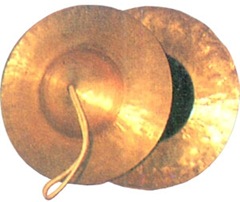
cymbals Ever watch a group of people who will stand and shout when their favorite team makes a great play or wins a hard fought game? Or how the audience at a concert will stand and applaud a talented musician who just gave a great performance?

I once attended the matinee of a mediocre Mozart opera with a friend. When it came time for the tenor to come on stage, Plácido Domingo came out to sing the role. Everyone stood and gave him a standing ovation--before he even sang!

Compare this reaction to the picture that John gives us in Revelation 4 and 5, of the One seated on a throne surrounded by 24 Elders and angels, and the response of all creation to the Lamb seated on the throne in chapter 5.

Note what N. T. Wright says about this scene:

image


There are a few ideas in this quote from Wright that resonate with me:

  1. Worship means, literally, acknowledging the worth of someone or something. All creation worships God, humans, animals, birds, et. al. because he deserves to be praised.
  2. Humans have something more to say when they join in the song of worship: They know Why God should be praised. He has made all things, and he has ransomed saints from all languages, people and nations.

I like what Wright says: This is God’s world as it should be, and the way it is in heaven already. I get goose bumps every time I read these two chapters of the Book of Revelation.

The question is, then, how do we worship here and now in our lives that somehow hearkens beyond us and replicates this heavenly scene?

  1. How can our worship acknowledge the worth of the one we worship? Who does that work out in a practical way?
  2. Do we fully understand the Why of worship? Do we grasp the full implications of what it means to say that God created all things, creature, nature and human, and that he has ransomed saints from all nations, tongues and peoples, to be a nation of Priests?

For me, the practical question is how can I experience or enter into worship that is worthy of God the father, God the Son, and God the Holy Spirit.

Again, Wright gives us two ideas:

First, you become like what you worship.

What happens when you worship money, sex or power? We are shaped by our desires to conform to these objects of worship. What happens when we begin to truly worship the God who created all things and has redeemed us for himself through his son Jesus Christ by the power of his spirit?

Because we are made in God’s image, worship makes us truly human.

You discover more fully what it means to be human as well as you begin to shrink as a human; you are no longer the center of the universe.

Good start, but a long journey. I think Carson Pue (p30f)  has given me some insight on this journey. He has stated that we often fall into two camps in our approach to following Christ.

The first group is similar to power-boaters, for whom the destination is of primary importance. The primary concern is to get to the destination as quickly and as safely as possible, and once there, concern shifts to having fun and enjoying the destination. This is what makes the journey worthwhile.

The second group are the sailors. The journey is as important as the destination. They enjoy the various aspects of the journey along the journey as the proceed toward the destination.

I’ve discovered that I need to become more of a sailor and less of a power-boater in my walk with Christ.

I won’t dwell on the implications of the two metaphors, but hopefully they are food for thought.

signature